
At Atomica Arts we believe that real transformation — personal, professional, and collective — requires more than information. It requires experience. That is why everything we do is rooted in four interconnected disciplines that work together to engage the whole person: mind, body, spirit, and community.
These are not abstract concepts. They are living tools — ancient wisdom and contemporary practice woven together into something genuinely useful for the world we live in today. This is the Atomica Arts approach — and it is rooted in one simple mission: to close the gap between knowledge and experience.
DISCIPLINE 1: Meditation & Mindfulness
The Art of Observing Ourselves

In a world designed to distract us, the ability to be present is one of the most radical and powerful skills a human being can develop.
Meditation is a journey from external activity to inner silence. It is not about emptying the mind — it is about learning to observe it. Through regular practice, we begin to notice the difference between who we are and what we are thinking. That space of awareness is where everything changes.
Mindfulness extends this practice into daily life — bringing the same quality of attention and non-judgment to our thoughts, emotions, relationships, and actions. Rather than reacting automatically to what life brings, mindfulness teaches us to pause, notice, and choose.
Research consistently confirms what ancient traditions have always known: meditation and mindfulness reduce stress and anxiety, improve focus and emotional regulation, support better sleep, and strengthen overall wellbeing. At Atomica Arts we teach these practices not as self-improvement techniques but as tools for genuine liberation — from the patterns, pressures, and inner voices that keep us from living fully.
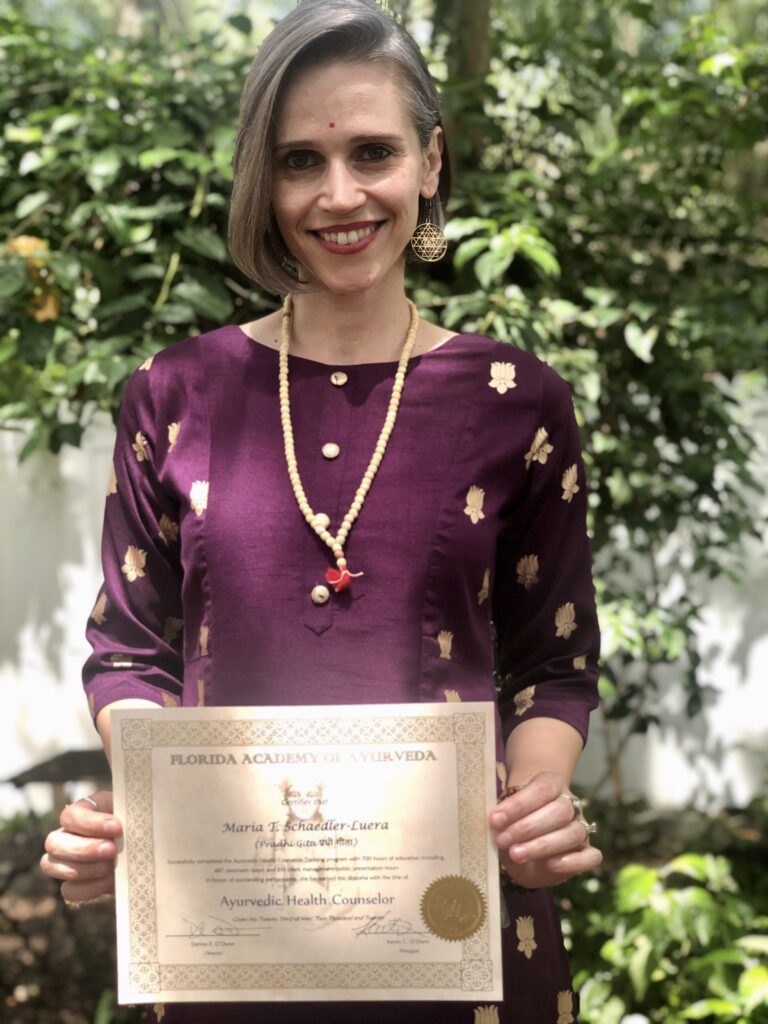
Maria teaches a range of Vedic meditation and mindfulness practices — including Primordial Sound Meditation, mantra-based meditation, breathwork (Pranayama), mindfulness through the senses, nervous system regulation, and chakra-based awareness practices — always adapted to the needs and context of her audience. She is a certified Gaja Meditation and Mindfulness Instructor and Ayurvedic Health Counselor.
DISCIPLINE 2: Ayurveda
The Art of Observing Life
Ayurveda — which means “science of life” in Sanskrit — is considered the world’s oldest system of medicine, originating in India over 5,000 years ago. It is not a treatment for illness. It is a philosophy of living — one that recognizes that each person is unique and that true health means balance on every level: physical, psychological, and spiritual.
At the heart of Ayurveda is a simple but profound idea: the same forces that shape the natural world also shape us. When we understand our unique mind-body constitution — our dosha — we can make choices about food, sleep, movement, and daily rhythms that genuinely support our wellbeing, rather than fighting against our own nature.
In practice, Ayurveda at Atomica Arts means learning to listen to your body. It means understanding why certain times of year feel harder than others, why certain foods energize you while others deplete you, and how the ancient wisdom of the doshas can offer a surprisingly practical roadmap for modern life.
Maria is a certified Ayurvedic Health Counselor — offering personalized Ayurvedic assessments as part of her private coaching packages, and group workshops through Atomica Arts programs and Atomica Labs. Whether you are looking for individual guidance or a shared learning experience, Ayurveda at Atomica Arts is always practical, accessible, and deeply relevant to everyday life.
DISCIPLINE 3: Theater & Improvisation
The Art of Observing Human Actions
Theater is not just an art form. It is a mirror — one of the most powerful tools we have for seeing ourselves clearly and imagining something different.
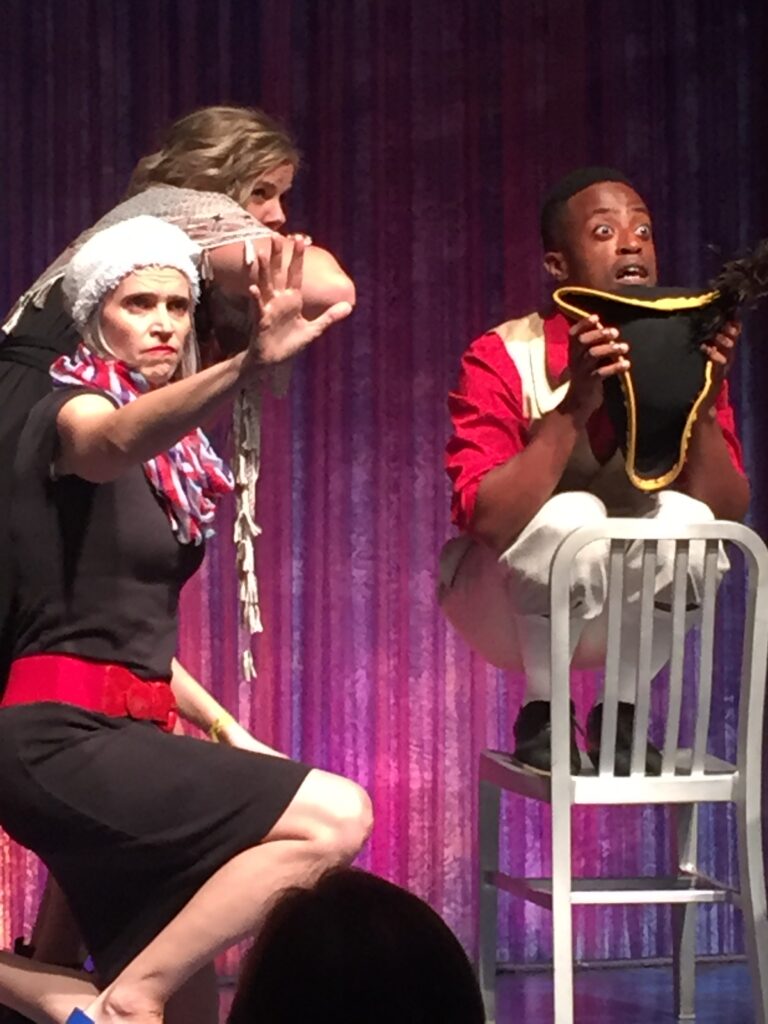
We are all, in some sense, performers. We play roles — as leaders, parents, students, professionals, community members — and we often forget that we are the ones choosing how to play them. Theater exercises invite us to step back, observe our own patterns, and ask: Is this the role I want to play? Is this the story I want to live?
At Atomica Arts, theater and improvisation draw especially from the work of Brazilian director and Nobel Peace Prize nominee Augusto Boal, whose Theater of the Oppressed transformed performance into a tool for social change and personal liberation. His techniques — Image Theater, Forum Theater, the Rainbow of Desire — are not about learning to act. They are about learning to see, to listen, and to choose differently.
Improvisation extends this into the realm of spontaneity and presence. When we improvise, we practice saying Yes, And — accepting what life offers and building on it rather than resisting or shutting down. This principle, simple in a theater workshop, becomes transformative in a meeting room, a classroom, a relationship, or a moment of crisis.
Maria has taught Theater of the Oppressed, Applied Improvisation, and Playback Theater techniques for the American Repertory Theater, Harvard Extension School, Lesley University, and communities across Boston and Sarasota. As the author of Be the Protagonist — and the forthcoming The Resilient Protagonist — Maria has spent over two decades developing an applied theater language that runs through everything she does: workshops, coaching, speaking, and consulting. Whether she is working with a classroom of young children, a team of nonprofit leaders, or a room full of trauma survivors, the tools of applied theater are always present — not as performance, but as a way of seeing, listening, and transforming from the inside out.
DISCIPLINE 4: Intercultural Competency
The Art of Social Change
Every belief we hold about ourselves, others, and the world around us shapes everything — how we lead, how we teach, how we listen, how we love. And most of those beliefs were handed to us before we were old enough to question them.
Intercultural competency is the practice of becoming conscious of those inherited lenses — the cultural assumptions, social conditioning, and unexamined worldviews that quietly run our lives — and developing the capacity to see beyond them. It is not about erasing identity. It is about expanding it.
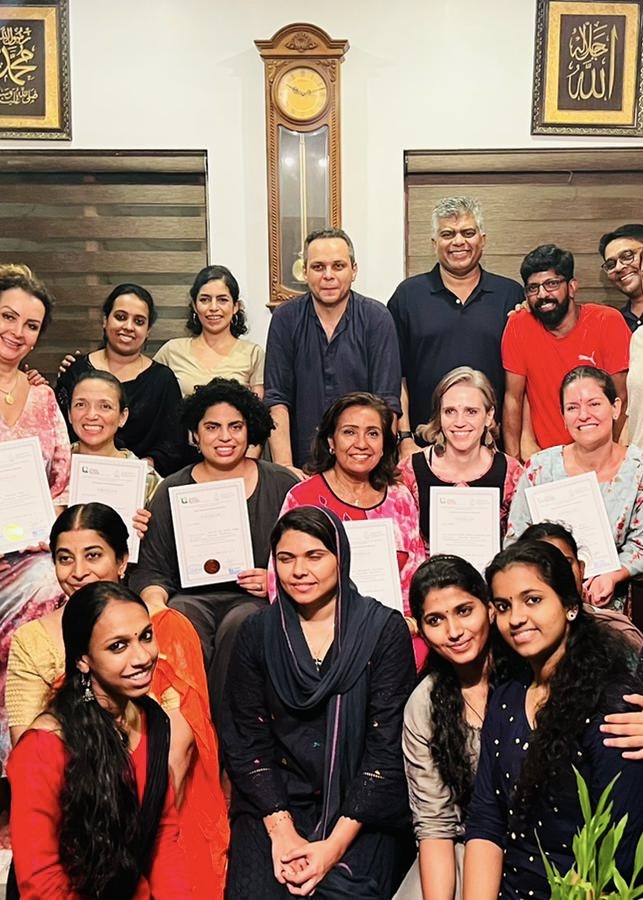
At Atomica Arts, this work is deeply personal. Maria was born in Brazil, trained in France and Austria, earned a Master’s degree in Intercultural Relations from Lesley University, and has spent over two decades living, studying, and working across cultures, languages, and communities. She facilitates in English, Spanish, and Portuguese — and speaks French — bringing a genuinely multicultural perspective to every room she enters that goes far beyond theory. For Maria, intercultural competency is not an academic subject. It is the story of her life.
The tools of intercultural competency at Atomica Arts include cross-cultural dialogue, community storytelling, bilingual facilitation, culturally responsive arts integration, and the simple but powerful practice of learning to see ourselves through someone else’s eyes.
When we change how we see ourselves, we change how we see the world. And when we change how we see the world, we become capable of changing it.
BRINGING IT ALL TOGETHER:
What makes Atomica Arts unique is not any one of these disciplines in isolation — it is the way they work together. Meditation builds the inner stillness that makes self-observation possible. Ayurveda grounds that awareness in the body and in daily life. Theater gives it form, expression, and the power of imagination. And intercultural competency reminds us that our own transformation is always connected to the transformation of the world around us.
This is the Atomica Arts approach. Not a formula. Not a curriculum. A living practice — for ages 3 to 93, in any language, in any community, at any stage of life.